

Paulownia Board
Company advantage
24h Online Service
You can contact us to inquire about pre-sales, sales, and after-sales services, and we will give you a very satisfactoryWe are at your service online 24 hours a day.
Rich Technical Experience
Our staff are some of the most experienced in the industry, providing product-correct advice and solutions, ensuring we provide our customers with technical expertise and service.
Strictly Control The Procurement
Insist on quality first, pursuing the concept of integrity, keep quality promise, establish a good corporate reputation and social image, improve customer satisfaction and customer.
One-stop Solution
With rich experience and one-to-one service,we can help you choose products and answer technical questions.


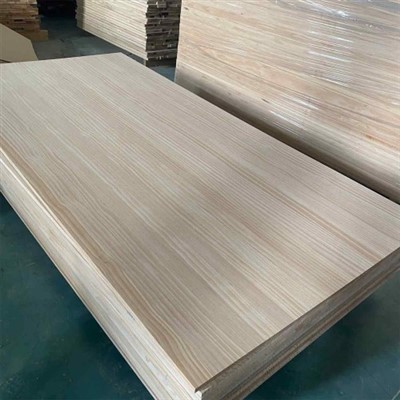


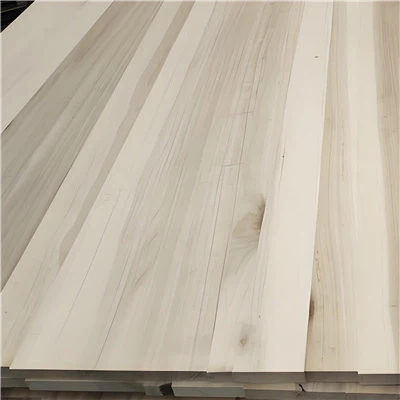

What is Paulownia Board
Paulownia board is a type of engineered wood product made from the fast-growing Paulownia tree, also known as the princess tree or kiri. This deciduous tree species, native to China, is valued for its lightweight timber, rapid growth rate, and environmental benefits. The wood has a low density, which makes it easy to work with and ideal for applications where weight is a consideration.
Benefits of Paulownia Board
Lightweight
Paulownia wood is one of the lightest hardwoods available, making it an excellent choice for applications where weight reduction is crucial, such as in aviation, boatbuilding, and sports equipment.
Strength-to-Weight Ratio
Despite being light, Paulownia board has a high strength-to-weight ratio, which means it can support significant loads without adding much weight to a structure or product.
Fast Growth Rate
Paulownia trees grow rapidly, reaching maturity in as little as five to ten years, which makes them a highly renewable resource compared to slower-growing hardwoods.
Eco-Friendly
The quick growth cycle of Paulownia trees contributes to carbon sequestration, helping to mitigate climate change. Moreover, the trees have a relatively low water requirement and can be grown on poorer soils.
Durability
Paulownia wood is resistant to decay and termite attack, making it suitable for outdoor applications and environments prone to insect infestation.
Workability
The wood is easy to cut, drill, and shape, allowing for efficient manufacturing processes and reducing labor costs. It also finishes well, accepting stains and paints readily.
What are the Applications of Paulownia Board
Furniture
Paulownia wood is a popular choice for crafting high-quality furniture pieces due to its lightweight nature and attractive appearance. From intricate carvings to modern designs, it complements a wide range of furniture styles.
Interior Decor
Its elegant look and ease of customization make it a favored material for interior décor elements like wall paneling, moldings, and ceilings, adding a touch of class to any space.
Boat Building
Its lightweight and buoyant properties make Paulownia wood an excellent option for constructing boats and watercraft, ensuring a smooth and enjoyable sailing experience.
Musical Instruments
The wood's excellent acoustic properties and sound-absorbing capabilities make it a preferred material for crafting musical instruments like guitars, ukuleles, and other stringed instruments.
Construction and Renovation
From doors and windows to flooring and cabinetry, Paulownia wood finds applications in various aspects of construction and renovation projects, offering a perfect blend of strength and aesthetics.
Types of Paulownia Board
Solid Paulownia Planks
These are made directly from sawn logs and offer the natural grain and texture of the wood. They are used for furniture, cabinetry, and decorative purposes where a seamless appearance is desired.
Paulownia Plywood
Roduced by gluing together thin veneers of Paulownia wood, this type of board provides increased stability and is less likely to warp or crack compared to solid wood. It's commonly used in construction and manufacturing where dimensional stability is needed.
Laminated Paulownia
Similar to plywood, laminated Paulownia consists of multiple layers of wood bonded together. However, it often uses thicker layers and can be designed to meet specific strength requirements for applications like boat building or heavy-duty outdoor furniture.
Engineered Paulownia
This term encompasses any board made from Paulownia that has been processed to enhance certain properties, such as improved strength or resistance to moisture. Engineered Paulownia can be tailored for specific uses through different manufacturing techniques.
Composite Paulownia Panels
These panels are made by combining Paulownia wood with other materials like fiberglass or resins to create a product that is lighter, stronger, and more durable than traditional wood. Composites are popular in aerospace and marine applications.
Harvesting the Paulownia timber: The timber must be harvested from sustainably managed forests where the trees have fully matured but are still relatively young.
Cutting the Paulownia logs: The Paulownia logs are then cut into smaller sections for transportation and processing.
Drying: The Paulownia timber is then carefully dried in a climate-controlled environment to remove any excess moisture.
Planing and Sizing: Once the drying process is completed, the Paulownia timber is cleaned and planed to remove any bark or rough areas.The boards are then cut and shaped to the desired size.
Sanding
The boards are then sanded to create a smooth, flat surface before they are glued together.
Gluing
Once the boards are sanded, they are glued together and clamped in place while the glue dries.
Fitting
After the glue has dried, the boards are fitted and sanded to create a finished product. Additional sanding and finishing may be necessary depending on the desired results.
Paulownia Board Features
Lightweight
Paulownia wood is renowned for its exceptional lightweight properties, making it significantly lighter than most traditional hardwoods. This characteristic makes it easy to handle and ideal for projects where weight is a concern.
Strength and Durability
Despite its lightness, Paulownia wood exhibits impressive strength and durability. It offers a reliable structural integrity, making it suitable for a wide range of applications.
Fine Grain and Golden Hue
The wood's fine, even grain and attractive golden hue contribute to its elegant appearance, adding a touch of sophistication to any project.
Workability
Paulownia wood is easy to work with and possesses excellent workability. It can be easily carved, shaped, and molded, allowing artisans and designers to bring their creative visions to life.
Thermal Insulation
The wood's unique cellular structure provides excellent thermal insulation properties, making it a preferred choice for constructing energy-efficient structures.
How to Choose Paulownia Board
Application
Determine how the board will be used. Construction, furniture, musical instruments, or decorative purposes may require different qualities and thicknesses of Paulownia.
Grade
Look for the grade of the Paulownia board. High-grade boards have fewer blemishes and a more uniform texture, suitable for visible applications. Lower grades may be more affordable but might have knots and imperfections.
Size and Thickness
Measure the space where the board will be used and choose the appropriate size and thickness to fit your requirements. Remember that thicker boards are generally more structurally sound but heavier.
Moisture Content
Opt for kiln-dried Paulownia if possible, as it has a lower moisture content, which reduces the risk of warping and shrinking. Always check the moisture content percentage specified by the manufacturer.
Surface Finish
Consider whether the board needs to be finished before use. Some applications may require raw Paulownia, while others benefit from a pre-applied varnish or lacquer.
Sustainability
Ensure that the Paulownia wood is sourced from sustainable plantations. Responsible forestry practices help maintain ecological balance and support long-term availability of this valuable resource.
Supplier Reputation
Buy from reputable suppliers who can provide information about the origin of the wood, quality control measures, and after-sales support.
Budget
Set a budget that aligns with the quality and quantity of Paulownia board you need. Higher-quality or specialty boards will typically cost more.
How to Maintain Paulownia Board
Proper Storage
Keep Paulownia boards in a dry environment with consistent temperature and humidity levels. Avoid storing them in direct sunlight or damp basements, as excessive moisture can cause warping or rot.
Moisture Control
If the boards are going to be used outdoors or in areas with high humidity, consider using a moisture barrier or sealer to protect against water damage. Kiln-dried Paulownia is less prone to warping than green wood, so purchasing pre-dried boards can be beneficial.
Cleaning
Regularly dust off Paulownia boards with a soft cloth to remove dirt and debris. For more stubborn stains, use a mild soap solution and gently clean the surface with a soft brush or cloth. Do not use harsh chemicals or abrasive cleaners as they may damage the wood.
Protection
Apply a suitable finish to the Paulownia board to protect it from scratches, stains, and UV damage. Options include varnish, lacquer, or oil finishes, depending on the intended use and desired appearance. Reapply the finish periodically to maintain protection.
Handling Precautions
When handling Paulownia boards, use gloves to avoid leaving fingerprints or oils on the surface. Be cautious when using sharp tools near the edges to prevent chipping or gouging.
Repair Damage
If the board becomes damaged, address the issue promptly. Minor scratches can often be sanded out and re-finished, while deeper gouges or cracks may require professional repair.
Our factory
Caoxian Lulinfeng Machinery Co., Ltd. (formerly Shandong Caoxian Linfeng Machinery Factory) is a dedicated woodworking machinery manufacturer integrating R&D, manufacturing, sales and integration. Since the establishment of the company in 2006, it has been adhering to the principle of "reputation first, customer first" , Has won the trust of domestic users with the principles of integrity, trustworthiness and innovation. Now it has become one of the important domestic woodworking machinery manufacturers. The products are sold all over the country, which has played a strong role in promoting the development of China's board industry.The company mainly produces various wooden crafts such as straight-jointed boards, finger-joined boards, multi-layer boards, furniture fittings and so on. Our products are flexible in manufacturing, based on customer requirements, what kind of products you need, we guarantee to produce products that satisfy you.

FAQ
As one of the leading paulownia board suppliers in China, we warmly welcome you to wholesale high-grade paulownia board made in China here from our factory. All our products are with high quality and competitive price.
solid pine furniture board, e1 solid particle wood, solid wood bread board