

Finger Joint Board
What is Finger Joint Board?
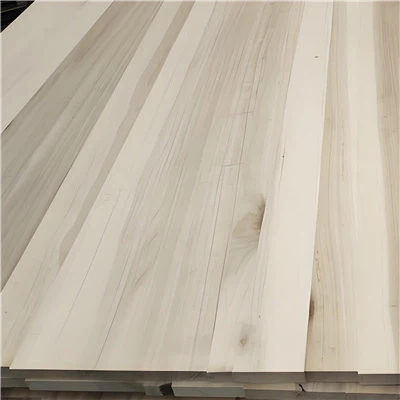
Finger joint board is a type of engineered wood product made by joining short lengths of wood together using finger joints. It is made from scraps and leftovers from lumber mills that are trimmed, cut, and shaped so that their ends interlock in a way that makes a highly stable, straight, and virtually knot-free board that can be used for many different purposes. Finger joint board is commonly used in furniture, flooring, paneling, and trim work, and can be made from a variety of woods including pine, oak, and maple.
Why Choose Us

24h Online Service
You can contact us to inquire about pre-sales, sales, and after-sales services, and we will give you a very satisfactoryWe are at your service online 24 hours a day.
Rich Technical Experience
Our staff are some of the most experienced in the industry, providing product-correct advice and solutions, ensuring we provide our customers with technical expertise and service.
Strictly Control The Procurement
Insist on quality first, pursuing the concept of integrity, keep quality promise, establish a good corporate reputation and social image, improve customer satisfaction and customer.
One-stop Solution
With rich experience and one-to-one service,we can help you choose products and answer technical questions.



Advantages of Finger Joint Board
High Quality
Made from high-quality Pine which is known for its strength and durability. Our board is perfect for use in furniture, flooring, cabinetry, and decorative projects.
Easy To Work With
Easy to cut, sand, and finish. It is perfect for use in DIY projects and can be easily customized to suit your needs.
Stability And Strength
Finger jointed boards are crafted by joining shorter sections of wood using interlocking fingers, creating a strong bond that mimics the strength of solid wood.
Cost Effectiveness
Utilizing shorter wood sections to create finger jointed boards allows for the use of less expensive or reclaimed wood. This cost-effective approach can be advantageous for large-scale projects without compromising on quality.
Types of Finger Joint Board
Straight Finger Joint Board
Straight finger joint board is a special method of joining wood along its length that utilises the principle of wedging. It uses a standardised profile with many small wedges that is pressed with great force into a corresponding opposite profile.
Angled finger joint board
Angled finger joint board is a type of engineered wood product that is made by joining together two or more pieces of solid wood with a series of interlocking finger joints. These joints are cut on an angle, allowing the boards to lock together tightly and provide a seamless appearance once installed.


End-to-end Finger Joint Board
The joint is made by cutting a series of evenly spaced "fingers" or notches along the exposed ends of the boards, which interlock tightly when joined together. This provides a strong and durable connection between the two boards, allowing them to function as a single unit.
Stepped finger joint board
Stepped finger joint board is a type of construction material that features interlocking "fingers" along its edges. These fingers are specially cut and shaped to fit together precisely in a puzzle-like pattern, providing a strong and durable joint.Stepped finger joint boards are commonly used in the construction of floors, walls, and furniture.
Material of Finger Joint Board
Rubberwood is one of the materials that may be used to make them. Finger joint rubber wood boards are made from treated rubberwood which are kiln dried, finger jointed, edge glued, cold-pressed and sanded to make sheets of ready to use panel boards.

Finger-jointed boards are made of short solid wood slats. The bigger the slats, the better, and they will not be easily broken.The biggest drawback of finger-jointed boards is that they are easily deformed due to changes in internal stress during dry shrinkage and wet expansion, resulting in deformation. Therefore, it is very important that the moisture content of the finger joint board reaches the standard, and the palm of the hand does not feel cold to the touch. Finger-jointed boards are also divided into two types: jointed and jointless. Knotted finger-jointed boards have holes, while jointless finger-jointed boards have no holes and look more beautiful.
Generally speaking, the larger the growth rings of the slat core material of finger-jointed boards, the older the tree is and the better the material is. Thousands of years ago, boat finger-jointed boards are made of large-diameter logs. The board core has good hardness and is not easy to deform. The slats of finger-jointed boards are linked together by adhesive. The bonding strength of the boards has an important influence on the quality of finger-jointed boards. The splicing gaps between each slat are small, and there is no lack of glue or degumming. Finger joint plates are divided into open teeth and dark teeth. Dark teeth are better because the open teeth are more likely to become uneven after painting. Of course, dark teeth are more difficult to process.
How to Maintain Finger Joint Board
When dust appears on the surface of finger-jointed furniture, it should be wiped gently with a clean soft cloth. Do not use a wet cloth. Use a hard cloth dipped in ordinary water to wipe, otherwise it will easily cause damage to the surface of the board. In addition to wiping with a soft cloth, you can also You can use alcohol wipes to wipe, because the water content of alcohol wipes is very low and will not affect the board.
Keep your finger joint board away from moisture, as it can cause warping, swelling, and damage to the wood. Place it in a cool and dry place.
On finger-jointed board furniture, such as frequently used desktops, you can place a layer of mat or apply a layer of gloss wax on the surface to prevent water vapor or stains from penetrating into the board and causing cracking and damage to the board. If there are cracks on the surface of the furniture, they should be repaired in time, otherwise the cracks will become larger and even deformed, causing complete damage to the furniture.
Whether it is a finger joint board or other types of boards, we must take good care of them. During use, we must not hit them with hard objects or rub them with sharp objects, otherwise irreparable scratches will appear. Not only Affecting the beauty of furniture also affects its service life.
Furniture
Finger joint boards are often used in furniture making because they are strong, stable, and easy to work with. They can be used to create table tops, chair legs, drawers, and more.
Flooring
Finger joint boards can be used as flooring material because they are durable and can withstand heavy foot traffic. They can also be sanded and refinished just like solid wood flooring.
Trim And Molding
Finger joint boards are perfect for creating trim and molding because they are straight and consistent in size and shape. They can be used to create crown molding, baseboards, and door frames.
Cabinetry
Finger joint boards are commonly used in cabinetry because they can be cut and shaped to fit any size or shape needed. They can be used to create cabinet doors, shelves, and drawers.
Construction
Finger joint boards can also be used in construction projects such as framing walls or building outdoor structures such as decks or pergolas. Because they are engineered wood products, they are less likely to warp or twist over time, making them a reliable choice for structural applications.
How to Choose Finger Joint Board
Species Of Wood
Different species of wood have different characteristics that may make it more suitable for certain applications. For example, cedar is naturally resistant to rot and insects, making it a good choice for outdoor use.
Grade Of Wood
The grade of wood refers to the quality of the wood and the presence of any defects. The grades of finger joint board include clear, select, and common.
Dimensions
Consider the width and thickness of the board, as well as the length you need for your project. Remember that finger joint boards can be joined end-to-end to create longer lengths.
Color And Grain
Finger joint boards can vary in color and grain depending on the species of wood. Choose a color and grain that will complement your project.
What Tools Are Needed to Cut and Shape Finger Joint Boards
Circular Saw: This tool is used to make straight cuts in the finger joint boards. It is used to make the initial cuts to the boards, and can also be used for rough shaping.
Router: This tool is used for shaping the finger joint boards. It can be used with various bits to create different shaped cuts. The router is especially useful for shaping the finger joints themselves.
Chop Saw: This tool is used for making precision cuts at specific angles. It is particularly useful for shaping the corners of the finger joint boards.
Jig Saw: This tool is used for cutting curves and shapes into the finger joint boards. It can also be used for cutting out smaller pieces of the joint board that may be needed for specific projects.
Table Saw: This Saw: is used for making precise cuts and shaping the finger joint boards. It is particularly useful for cutting the boards to specific lengths.
Planer: This tool is used to smooth and even out the surface of the finger joint boards. It can also be used to make the boards thinner or thicker, depending on the specific needs of the project.
Sandpaper: This tool is used to smooth out rough edges and surfaces on the finger joint boards. It is used after the boards have been cut and shaped to achieve a smooth finish.
Process of Finger Joint Board
Sorting And Selecting
The first step in the process of creating finger joint boards is sorting and selecting high-quality timber. Timber is selected for length, width, and thickness, and graded according to its strength and quality.
Planing And Cutting
The selected timber is then planed and cut into the required sizes and shapes using precision machines and equipment.
Finger Jointing
Once the timber has been cut, it undergoes a finger jointing process, where small cuts are made along the length of the timber, creating "fingers" that interlock when joined together. This process is done using a specialized finger jointing machine.
Gluing And Clamping
After the finger jointing process is complete, the individual pieces are then glued together using a specialized adhesive and clamped together to ensure a secure and strong joint.
Sanding And Finishing
Once the finger jointing process and gluing have been completed, the boards undergo a sanding and finishing process to ensure a smooth and even surface, free of any rough spots or imperfections.
Testing And Inspection
Quality control specialists inspect each board to ensure that it meets specific standards for strength, durability, and overall quality.
Packaging And Shipping
Finally, the finished finger joint boards are packaged and shipped to customers, where they can be used for a variety of purposes, from construction to furniture making.
Since the establishment of the company in 2006, it has been adhering to the principle of "reputation first, customer first" , Has won the trust of domestic users with the principles of integrity, trustworthiness and innovation. Now it has become one of the important domestic woodworking machinery manufacturers. The products are sold all over the country, which has played a strong role in promoting the development of China's board industry.

FAQ
Q: What are the parts of a finger joint wood?
Q: What is the finger jointing process?
Q: What is a finger jointed panel?
Q: What are the advantages of using finger joint boards?
Q: What types of wood can be used for finger joint boards?
Q: How are finger joint boards made?
Q: What are the recommended applications for finger joint boards?
Q: How do you maintain finger joint boards?
Q: What is a finger joint board used for?
Q: What is finger joint base board?
Q: Are finger jointed boards strong?
Q: What is the use of finger joint board?
Q: Why is finger joint wood good?
Q: Is finger joint board better than MDF?
Q: Are finger jointed boards strong?
Q: Is finger jointed wood cheaper?
Q: Is finger jointed lumber better than solid wood?
Q: Is finger joint pine better than solid pine?
Q: Can you use finger jointed lumber for framing?
Q: Can finger joint boards be stained or painted?
As one of the leading finger joint board suppliers in China, we warmly welcome you to wholesale high-grade finger joint board made in China here from our factory. All our products are with high quality and competitive price.
